

Experience the beauty and culture of the United States
We invite you to explore a nation of diverse cultures and sprawling landscapes. From the tropical gardens of Hawaii and the dense forests of Alaska to the hidden gems of the American heartland and the historic cities of the Eastern Seaboard, the treasures of the United States await your discovery. Read on to learn about the long legacy of craft brewing in the Midwest, trace the evolution of blues and jazz music and enhance your knowledge of the majestic bald eagle.
United States
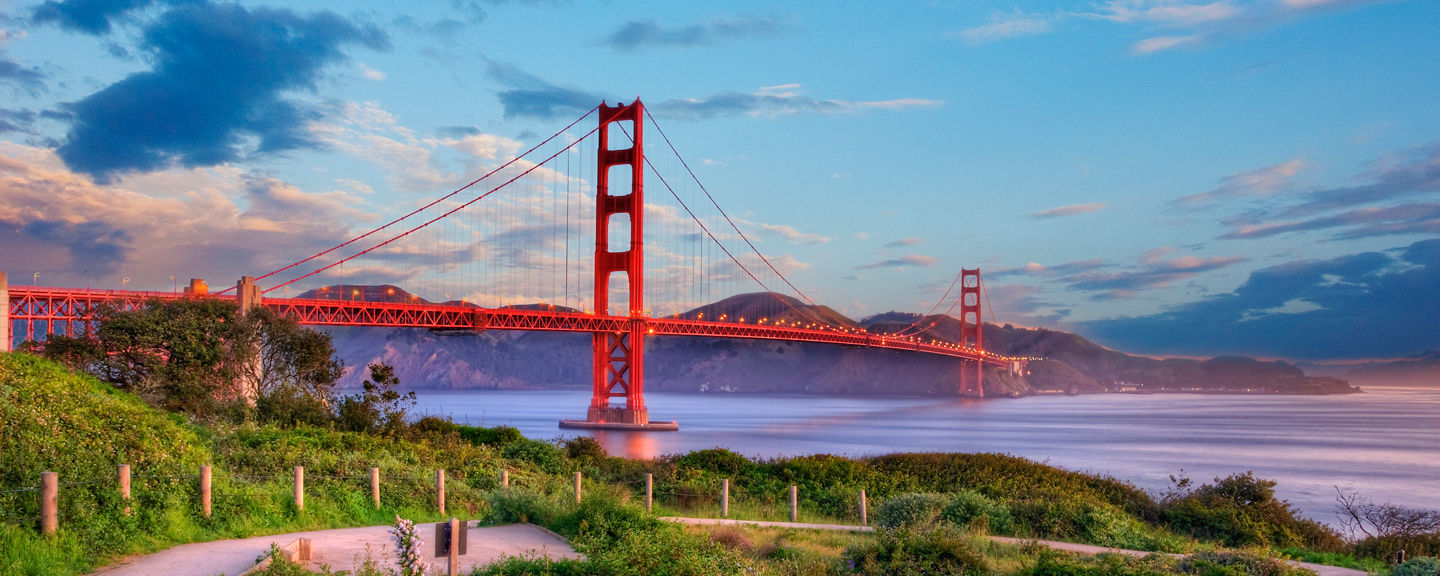
The United States of America comprises 48 contiguous states in the center of North America, bounded by Canada to the north, Mexico to the south, the Atlantic Ocean to the east and the Pacific Ocean to the west. They are joined by two additional states: Alaska, situated at the northwestern edge of North America, and Hawaii, an island in the mid-Pacific Ocean. With a land area of 3,809,525 sq mi. (9,866,289 sq km), the United States is the fourth-largest country in the world.
The climate of the United States is highly diverse, ranging from Arctic to subtropical. The terrain and precipitation levels of the country are equally diverse, including the Rocky Mountain’s rugged peaks and vast flat plains, as well as arid deserts and humid rainforests. Within the contiguous 48 states, destinations far from an ocean tend to have a continental climate, characterized by hot summers and cold winters.
The first inhabitants of what is now the United States likely arrived 20,000 to 35,000 years ago during a series of migrations from Asia to North America via the Bering Strait. By the time the first Europeans arrived in what they called the “New World,” Indigenous people occupied all portions of the region.
During the Age of Exploration, successive waves of Europeans arrived, establishing colonies throughout the land. One of the most famous of these colonies, Plymouth, was founded in 1620 by Pilgrims, a group of religious settlers who had chosen to separate from the Church of England.
The American colonies continued to develop over the following 150 years. Although they operated at a distance from Europe, they also experienced significant military and economic pressures from abroad. On July 4, 1776, the Continental Congress adopted the Declaration of Independence, establishing the United States of America as a country separate from British rule.
Compared to many other nations, the United States is relatively young. Although it was founded in 1776, it achieved its current size only during the mid-20th century. While the states have been united under federal rule, many portions of the United States have preserved strong regional identities and distinctive culinary and cultural traditions.
Here are some of the historic destinations that visitors may see during a United States cruise:
- Cahokia Mounds State Park
The remains of the most sophisticated prehistoric native civilization north of Mexico are preserved at Cahokia Mounds State Park in southwestern Illinois. Today, approximately 70 mounds can be seen at this site on the Mississippi River floodplain just east of St. Louis. - American Revolutionary Landmarks
A visit to the major sites of the American Revolution in Massachusetts includes the Lexington Green, where Paul Revere warned of the approaching British troops. At Concord’s historic Old North Bridge, you can see where “the shot heard ’round the world” was fired, sparking the Revolutionary War. In Boston, visit the Old South Meeting House where Samuel Adams started the Boston Tea Party and the Old North Church, where the two lanterns associated with Paul Revere’s ride were lit. - Statue of Liberty
Formally named Liberty Enlightening the World, this colossal, UNESCO-listed statue in New York City has become a quintessential symbol of the United States. The idea for the statue was conceived by the French historian Édouard de Laboulaye in 1865, and the sculptor Frédéric-Auguste Bartholdi began work on the piece ten years later. The 305-foot (93 m) statue was gifted to the United States by France and dedicated by President Grover Cleveland on October 28, 1886. - Stonefield Historic Site
At the Stonefield Farming Village, you can get a glimpse into traditional Midwestern farm life. Learn how a rural Wisconsin farm worked in the 1900s and discover how farming techniques have advanced in modern times. - Hannibal
This charming Missouri town was the childhood home of Samuel Langhorne Clemens, better known as Mark Twain. Visit the real-life sites that inspired the author's beloved novels, including The Adventures of Tom Sawyer and Adventures of Huckleberry Finn. - National Civil Rights Museum
In Tennessee, discover where some of the most seminal moments of 20th-century civil rights history occurred. Housed on the site of the Lorraine Motel in Memphis, where Dr. Martin Luther King, Jr. was assassinated in 1968, this Smithsonian-affiliated museum chronicles five centuries of the civil rights struggle in America. - Vicksburg National Military Park
Visit the American Civil War site where the Battle of Vicksburg ended, turning the tide of the war in favor of the Union. You can see the site’s historic trenches, markers and monuments and learn about the impact the battle had on civilians and troops on both sides, including the many African Americans who served in the campaign. - Hollywood
This iconic Los Angeles neighborhood has become synonymous with the American film industry. Visitors may immerse themselves in the history of the silver screen by strolling along the Hollywood Walk of Fame or visiting the historic Grauman’s Chinese Theatre, now called the TCL Chinese Theatre. You can also see the Dolby Theatre—the home of the annual Academy Awards ceremony—or pass the famed Hollywood Roosevelt Hotel and pause for photos of the iconic Hollywood Sign.

-
Beers of the Midwest
The tradition of brewing beer in the American Midwest can largely be credited to 19th-century European immigrants that brought their brewing techniques from their home countries, particularly Germany. Some of the most popular styles included Pilsner, Kölsch, Lager and Weissbier.
As German immigrants began to settle in cities like Chicago, St. Louis and Milwaukee during the Industrial Revolution, mass production of beer soon followed. Adolphus Busch, who immigrated to St. Louis in 1857 from Germany, became the first American brewer to use pasteurization to keep beer fresh. In 1861, he married Lily Anheuser, daughter of pharmacist and brewer Eberhard Anheuser. This fortuitous union led to the creation of the Anheuser-Busch Brewing Association in 1879. After learning of new brewing methods while traveling in Germany, Busch used the name Budweiser—after Budweis, Germany—for his newest pilsner beer. The Anheuser-Busch company’s ability to transport bottled beer soon made Budweiser the most popular beer in the US.
Milwaukee’s proud brewing tradition began around the same time. Three Welsh immigrants opened the city’s first brewery in 1840, initiating a beer boom. Between 1840 and 1860, 35 breweries sprung up throughout the city, including Best Brewery, which would later become the famous Pabst. The Joseph Schlitz Brewing Company, another notable Milwaukee beer producer, was founded in 1849. It pioneered many brewing innovations, including the use of brown glass bottles, which has since become standard across the industry.
Today, while the large beer companies remain a staple of the Midwest, microbreweries also dot the landscape, providing more diverse choices for beer lovers. Many blend Old-World brewing styles with new innovations, like Toppling Goliath Brewing Co. in Decorah, Iowa, which is known for its award-winning IPAs and stouts. Larger Midwestern cities like Chicago, St. Paul and Detroit also boast vibrant craft beer scenes, and many local breweries feature taprooms where visitors can sample a selection of fresh, local brews.
-
Blues and jazz music
The blues is a genre of secular folk music founded on expressing the experiences and emotions of Black Americans. After the American Civil War ended in 1865, it is believed that formerly enslaved African Americans and their descendants created blues music while working on the grounds of historic homes in the South.
Certain qualities distinguish the blues from region to region, but in all its myriad forms, the genre is characterized by a somber, melancholy tone. To create a poignant mood, singers use vocal techniques like melisma, in which they sustain a single syllable across several pitches. Musicians also use instrumental techniques like choking or bending their guitar strings to create a whining, voice-like sound. Syncopation, a technique that emphasizes offbeats to create a variety of rhythms, adds variety and excitement to many blues songs as well.
The earliest references to the blues date from the 1890s and early 1900s. The rural blues developed primarily in Georgia, North Carolina, South Carolina, Texas and Mississippi before shifting north to cities like Chicago and Detroit during the Great Migration, when many African Americans moved out of the South. The blues also had a profound impact on the Harlem Renaissance, a revival of African American art, music and literature that took place in New York from 1918 to 1937. Influential writers like Langston Hughes valued the blues and its meaning for Black Americans.
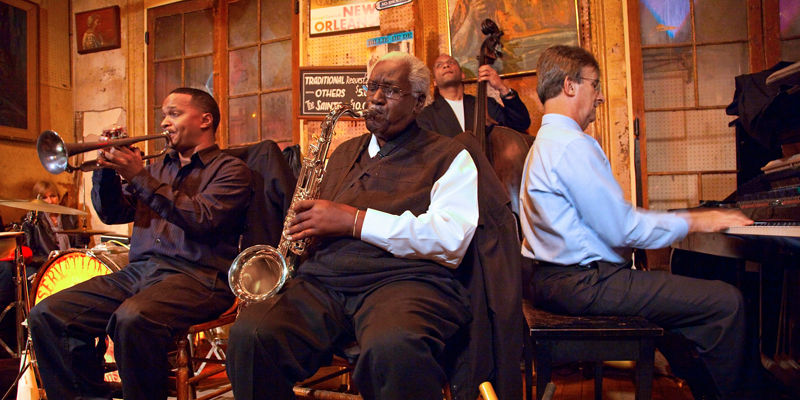
Not long after the dawn of the 20th century, jazz was born—ushering in an exciting new era of American music. Riffing on the swinging notes of blues music, jazz offered a more free-flowing approach to musical expression. Its distinctive distortions of pitch and timbre and rhythmic syncopation encouraged instrumentalists to improvise solos based on their immediate feelings. Only certain parts of the songs were memorized. Not only was this style of music compelling and fresh; it required great talent, skill and a deep familiarity with blues and jazz scales.
A talented New Orleans cornet player named Charles “Buddy” Bolden is generally recognized as the first jazz musician—although many others also claimed this distinction. Playing in New Orleans parades and dances, Bolden's band members included several important musicians, like Bunk Johnson and Sidney Bechet.
New Orleans rightly claims a significant place in jazz history, but it was far from the only place that the music took hold. Early forms of jazz were also practiced in places as far-flung as Los Angeles, Kansas City, Denver, Baltimore and New York City. During the late 1910s and early 1920s, many Southern jazz musicians, including the famous trumpeter Louis Armstrong, moved to urban centers like Chicago and New York City, where they continued to popularize and develop the genre.
By the 1960s, blues and jazz had become some of the largest influences on popular music, including rhythm and blues, rock ‘n’ roll, country, and Motown—named after the soulful music produced by Detroit’s famous Motown Record Corporation.
Today, music lovers can visit some of the famous jazz clubs, legendary recording studios and history-rich museums that continue to preserve the legacy of these iconic American genres. For example, the National Blues Museum in St. Louis celebrates this remarkable genre, its historic significance and the musicians that shaped it. And, in Detroit, visitors can see The Blue Bird Inn, a historic jazz venue, and tour the Motown Museum, located in the studio where greats such as Stevie Wonder, Marvin Gaye and the Supremes recorded their hit songs.
-
The American bald eagle
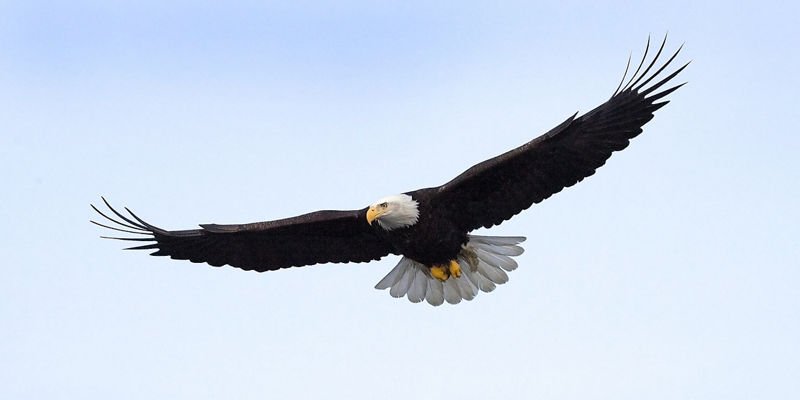
Native to North America, the bald eagle (Haliaeetus leucocephalus) is one of the largest birds in the US. Males reach about 36 in (90 cm) in length with a wingspan of 6 ft (2 m) and the larger females grow to 43 in (108 cm) in length with an impressive 8 ft (2.5 m) wingspan. Both males and females have dark brown, feathered bodies with yellow beaks, eyes and feet.
The bald eagle is not actually bald but instead gets its name from its round, white-feathered head, which stands out starkly against the rest of its plumage. Most commonly, bald eagles are found by rivers and large lakes. They primarily feed by plucking fish out of the water with their talons. They also prey on small mammals, reptiles and other birds.
Sometimes, the bald eagle is referred to as “the comeback bird.” Its population has made a strong recovery since becoming endangered in the mid-20th century, primarily due to the use of the now-banned pesticide DDT, which caused thin eggshells and reproductive failure. In their breeding grounds, these resourceful creatures use sticks and branches to build impressive nests on top of large trees or rock pinnacles near the water, which can be as wide as 5 ft (1.5 m). The nests are reused for several years and grow larger with each season. The longest-known occupied nest was used continuously for 34 years.
As the national bird of the United States, it may come as little surprise that these majestic creatures can be found in 49 US states (all except Hawaii). Visitors to Alaska can keep watch for bald eagles at the Chilkat Bald Eagle Preserve, which serves as a refuge for several hundred of these magnificent birds. Minnesota is another popular destination for travelers eager to encounter this remarkable species. The National Eagle Center in Red Wing allows visitors to see American bald eagles and golden eagles up close, while also learning about ecology, biology and natural history.
Most bald eagles establish breeding grounds in the Northern US and Canada and migrate along the Mississippi River, especially near the locks and dams, during the winter for feeding. In fact, the middle Mississippi has the second-largest overwintering bald eagle population in the continental US.
Tens of thousands of nature lovers visit the Mississippi River each year to participate in “Bald Eagle Watches” with hopes of witnessing this avian species in action. Using binoculars or spotting scopes allows bird watchers to see them in stunning detail. Depending on the weather, the best time of year to catch a glimpse of bald eagles along the Mississippi is January and February. However, they have been seen in December and March as well. Whether spotted soaring overhead, perched on trees or swooping down into the open waters to catch fish, these incredible raptors are a joy to watch.

United States Highlights
Exploring the United States provides the opportunity to uncover captivating art and architecture, sample regional delicacies and discover breathtaking scenery. Here are some highlights you may experience on your voyage:
- Feel the thundering power of the legendary Niagara Falls
- Visit key sites of the American Revolution in Massachusetts
- Seek out bottlenose dolphins in South Carolina’s Low Country
- Embark on an airboat ride through the Florida Everglades
- Stroll through the lively French Quarter in New Orleans
- Listen to a blues performance in the Mississippi Delta
- Make a rock ’n’ roll pilgrimage to Elvis Presley’s Graceland
- Explore the Country Music Hall of Fame in Nashville
- Visit a fifth-generation, family-run farm in Iowa
- Peruse masterpieces at the Art Institute of Chicago
- Sample craft beers and discover Milwaukee’s brewing heritage
- Sail the vast waterways of the Great Lakes
- Kayak past icebergs on Alaska’s majestic Valdez Glacier Lake
- Tour the Pearl Harbor Aviation Museum
Destination Insight Videos

Encounter Alaskan wildlife in their natural habitat with Scott Ranger of the Gastineau Guiding Company (15:50)
Marvel at Orcas, humpback whales and other magnificent wildlife as we explore Alaska's coastline with Scott Ranger from the Gastineau Guiding Company. In this fascinating presentation, hear tales about their whale watching excursions, designed to collect data and support ongoing research.

Journey to Sitka for a tour of the Alaska Raptor Center (10:17)
Join us as we explore the Alaska Raptor Center, a rehabilitation facility for injured birds that guests can visit in Sitka on our Alaska & the Inside Passage itinerary. Meet some of the birds who have been rescued by the center, including bald eagles, golden eagles and snowy owls, and learn how the injured raptors are treated and taken care of before being released back into the wild.

Discover the Great Lakes region with Jean Newman Glock (49:46)
Join Viking Ambassador-at-Large Jean Newman Glock as she travels “Beyond the Brochure” and explores the hidden gems of Lake Michigan and Lake Huron. In Alpena, MI, Jean visits the Thunder Bay Marine Sanctuary where she uncovers the remarkable efforts being made to preserve the shipwrecks resting beneath the waves. Then, she journeys to Algoma, WI, on Lake Michigan to raise a glass to the picturesque von Stiehl Winery and sample local varietals. Finally, Jean arrives at Mackinac Island and heads to the iconic Grand Hotel to enjoy tea with a resident historian who sheds light on how the hotel survived Prohibition.
United States Travel FAQ
Enriching Itineraries—United States
Choose one of our immersive voyages and discover the many benefits of exploring in Viking comfort.
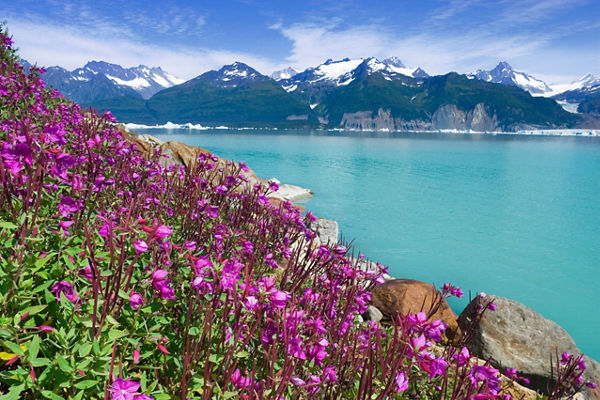
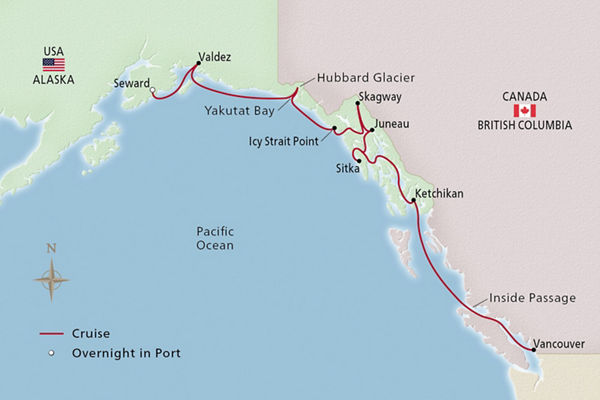
Alaska & the Inside Passage
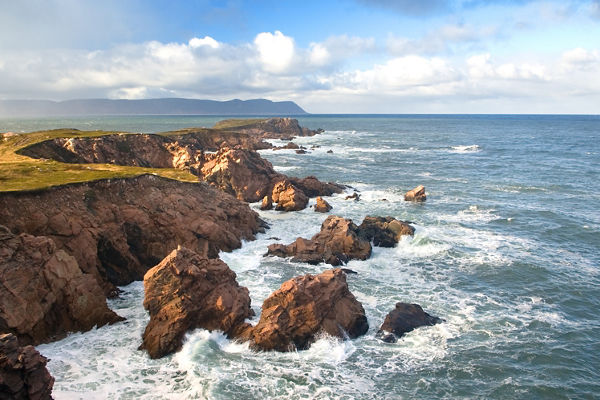
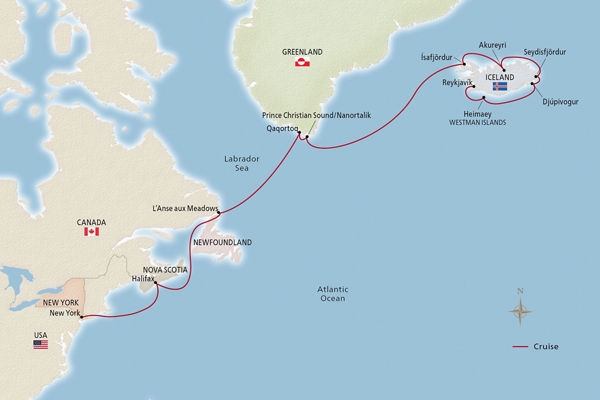
Iconic Iceland, Greenland & Canada
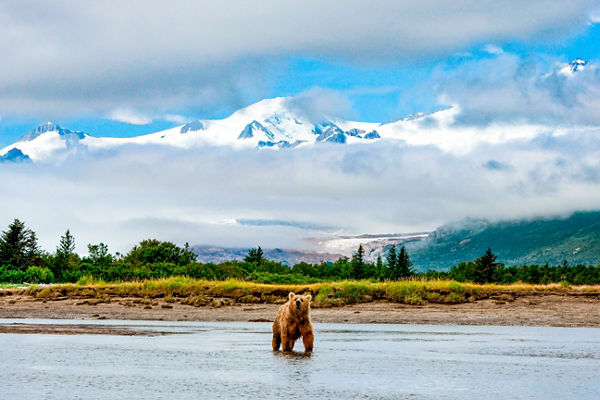
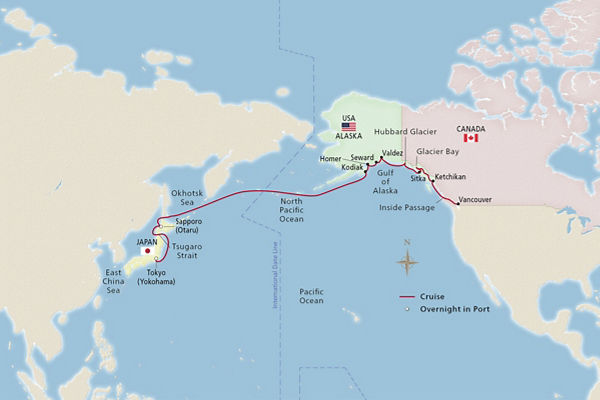
North Pacific Passage